
Gym Quest: Trainer Rise
Rik Vip Xeng Club Doi ThuongCard
4.386.00 Reviews
- Version
- 2.0.18.20260814
- Installs
- 50.00K
- Age Rating
- Everyone
Screenshots




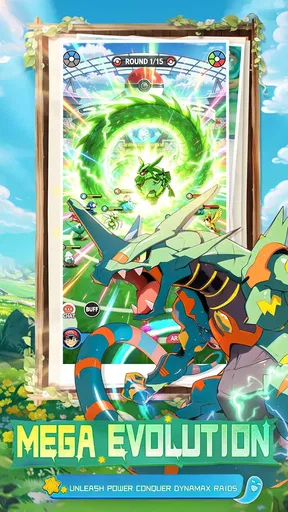



Our Review of Gym Quest: Trainer Rise
 Analysis by Appyee
I approached Gym Quest: Trainer Rise as a casual card game rather than expecting a deep competitive simulator. Its central idea combines pet training, cultivation, upgrading, and exploration, which gives the experience a broader loop than a simple hand-of-cards title. I found that mix appealing when I wanted short sessions with a sense of progress, although it also means the game asks me to learn several connected activities instead of presenting one perfectly focused system.
The game comes from Rik Vip Xeng Club Doi Thuong and is available free of charge for players using Android 7.0 or later. It is rated for Everyone, so its general presentation is suitable for a wide audience. At the time of writing, the listing shows a 4.3 average from around 2.6 thousand ratings, with more than 50 thousand installs. Those figures suggest a modest but established player base rather than the scale of a major card-game franchise.
Getting started without losing the thread
The first hurdle is not difficult combat or complicated card terminology. It is understanding what deserves attention first. The game presents pet training, cultivation, upgrading, and continent exploration as parts of one journey, and a new player can easily jump between them without knowing which action creates the most useful progress. My practical advice is to treat the opening period as orientation: learn what each screen contributes before spending resources or rushing into every available upgrade.
That approach matters because card games often reward careful sequencing. If I improve something immediately simply because a button is highlighted, I may later discover that another activity would have made the same session more efficient. In this game, I would first inspect the pet-related options, then look at the upgrade path, and only after that decide how much attention to give exploration. This is not about playing slowly; it is about avoiding random taps while the structure is still unfamiliar.
The store summary makes the pet element sound like the heart of the experience, and in practice that is the lens I would use to understand the rest. Training gives the journey a personal focus, cultivation suggests gradual development, while upgrading provides the familiar card-game feeling of making a collection or team stronger over time. Exploration then gives those improvements a reason to exist. If you prefer a game where every match is immediately clear and self-contained, this layered design may feel busier than expected.
One useful habit is to pause after each new screen and identify its purpose in plain language. Is it helping me strengthen a pet, improving a card-based setup, or opening the next stage of the world? That small mental label prevents the common beginner mistake of treating every menu as equally urgent. I also recommend reading the visible instructions instead of skipping them automatically. In a progression game, a short explanation can save more time than repeated trial and error.
What can make the first session feel awkward
The biggest source of friction is likely to be pacing. Players who enjoy collecting and gradual improvement may find the opening satisfying, while people looking for immediate tactical depth could feel that the game spends too much time guiding them through development. The combination of pet growth and card progression also creates two kinds of motivation at once: I want to win the next encounter, but I also want to improve the longer-term setup. Those goals do not always point to the same action.
I would not judge the game after only a few minutes. The concept depends on the relationship between its systems, so the experience becomes easier to evaluate after I have seen how training, upgrades, and exploration feed into one another. At the same time, I would not keep pushing through confusion indefinitely. If the basic loop still feels unclear after a patient first session, that is a meaningful sign that a more straightforward card game may suit you better.
Another practical question is whether it works well for short everyday breaks. I think it can, provided I enter with one small goal instead of trying to complete everything. For example, during a commute or a lunch break, I might focus only on checking pet development and making one sensible upgrade. Saving exploration for a longer session reduces the feeling that I have started several tasks without finishing any of them.
Checks that make the experience smoother
Before blaming the game for a stalled session, I would begin with the simple checks that apply to any mobile title. I would confirm that the device meets the minimum requirement of Android 7.0 or later, make sure the installation has completed properly, and restart the app if a screen behaves unexpectedly. These steps sound basic, but they separate a genuine design issue from a temporary launch or loading problem.
I would also avoid switching rapidly between the game and other demanding apps during the first run. Mobile devices handle background activity differently, and a game that includes several progression screens may feel less responsive when the phone is under pressure. Closing unused apps, reopening Gym Quest, and giving each screen a moment to load is a sensible first response before assuming that progress has disappeared.
Connection quality is another reasonable thing to check whenever a feature does not respond as expected. I would try a stable connection, reopen the game, and repeat the action once rather than tapping repeatedly. Repeated taps can make it harder to tell whether the original command worked. If the situation concerns a purchase, I would be especially careful: I would wait for the transaction state to settle and check the relevant account history before attempting it again.
The game is free to install, but it includes optional in-app purchases ranging from under a dollar to about one hundred dollars per item. That range makes spending discipline important, especially for younger players using a shared device. I would review the purchase controls on the device before handing the game to a child, and I would treat paid boosts as optional rather than necessary for learning the core loop. The Everyone rating describes the age suitability, not a promise that every spending situation will be frictionless.
Version awareness is worth checking as well. The current version shown for the game is 2.0.18.20260814, so I would make sure the installed build matches the current release available through the normal store process. If a problem appears immediately after an update, restarting the device and launching the game again is a safer first step than repeatedly reinstalling. I would only consider reinstalling after making sure any account or progress recovery route is understood, because removing an app can create a separate progress problem.
A calmer way to organize upgrades
My strongest practical tip is to give each session a priority. I would choose one of three goals: strengthen a pet, improve the current card setup, or explore. I would not spend resources across all three simply because each option is available. Concentrating on one goal makes the result easier to evaluate and shows whether that activity actually improves the next part of the journey.
A second useful habit is to compare the immediate reward with the longer-term value. A small upgrade that helps right now may be less useful than an option that supports several future encounters. I would take a moment to inspect the wording around an upgrade and consider how often I expect to use the affected pet or card. This is especially helpful for players who tend to spend everything as soon as a resource bar fills.
There is also a difference between exploration as progress and exploration as testing. When I am still learning the game, I would use an exploratory attempt to understand the challenge rather than treating every result as a failure. I would note which part of my setup seemed weak, return to training or upgrading, and then try again with a specific change. That creates a simple feedback loop instead of random rebuilding.
For a realistic daily routine, imagine having ten minutes before an appointment. I would open the game, check whether a pet needs attention, make one upgrade that supports my current plan, and stop there if the next exploration step looks likely to require more concentration. Later, with more time, I could explore properly and judge the result. This keeps the game from turning a short break into a rushed sequence of half-finished decisions.
Recovering when progress or actions seem stuck
When an action appears not to register, I would first wait briefly, then leave the screen and return once. If that does not help, I would close and relaunch the game, checking whether the earlier action actually completed before trying it again. This sequence is safer than immediately repeating a purchase, upgrade, or other resource-consuming command.
If the game opens but the journey feels confusing after a restart, I would retrace the last clear step rather than starting over mentally. Look at the pet development area, review the current upgrade choices, and identify the most recent exploration point. Writing down that one piece of information can help when a session ends abruptly. It also prevents me from spending resources merely because I am unsure what happened.
Reinstallation should be a last resort, not the default fix. Before using it, I would confirm that the device is online, the operating system is supported, and the account or progress situation is clear. If the issue is only a slow response, reinstalling adds risk without addressing the cause. A clean restart and a patient second attempt are usually the more sensible first moves.
For payment-related trouble, I would avoid making several attempts in quick succession. I would check whether the store has recorded the transaction, restart the game, and allow time for the result to appear. If the item still does not arrive, the appropriate next step is to use the store’s normal support process with the transaction details. That is more reliable than assuming the game has simply ignored the purchase.
When another explanation fits better
Not every disappointing session is caused by a technical fault. Sometimes the real issue is a mismatch between the player and the design. Gym Quest is built around development and exploration, so someone who wants rapid, pure card battles may find the pet and cultivation layers distracting. In that situation, a conventional duel-focused card game would probably be a better choice, even if this title is running perfectly.
The opposite is also true. If you enjoy watching a companion grow and like having several forms of progress, the broader structure may be more rewarding than a game that resets your attention after every match. I particularly see the appeal for players who prefer gradual goals: improve a pet, make a thoughtful upgrade, then test the result in a new area. The game has a more personal rhythm than a card app that is only about winning the next hand.
The free entry point is helpful for trying that rhythm, but the purchase range changes how I would recommend it to different people. Adults who can ignore optional spending may have no issue. Families should establish clear rules before play, and anyone who dislikes games with purchasable items should decide whether the presence of those offers will be irritating even when they are not required. The right question is not only whether the game costs nothing to download, but whether its spending model matches your habits.
I would also skip it if you need a game that works as a completely passive time filler. Training, cultivation, upgrading, and exploration all ask for at least a little decision-making. The game is more suitable when I am willing to pay attention to the direction of progress. If I only want to tap through a few automatic rewards, a simpler idle title may feel less demanding.
Compared with a traditional card game, this one places more emphasis on the journey around the cards. Compared with a pure pet-raising game, it adds a strategic layer through upgrading and exploration. That middle position is its clearest identity, but it is also its main trade-off. It will not replace a specialist game for players who want the deepest possible version of one genre. Its value comes from combining familiar ideas into a lighter, more approachable package.
My practical verdict after settling into the loop
I see Gym Quest: Trainer Rise as a reasonable pick for players who want a free card game with pet development and a sense of world exploration. The concept is easy to describe but takes a little patience to organize in practice. My enjoyment improved when I stopped treating every available action as urgent and began setting one goal per session. That change made the progression feel deliberate instead of scattered.
The game is best approached with modest expectations. It is not the obvious choice for someone seeking a highly focused competitive card experience, and the layered progression may initially feel less direct than expected. Optional purchases also deserve attention, with individual items reaching roughly one hundred dollars, so I would set spending boundaries before playing regularly.
For a friend, I would recommend trying it if the combination of pets, upgrading, and exploration sounds more appealing than a standard match-only format. I would suggest checking the Android requirement, starting with a stable connection, and spending the opening session learning the flow rather than chasing every reward. Those small preparations address the most likely points of friction without turning setup into a project.
My final view is positive but selective: Gym Quest: Trainer Rise works best as a gradual card adventure, not as a pure card battler. If you enjoy making small improvements and testing them over time, its free entry makes it easy to explore. If you want instant clarity, minimal menus, or no purchase prompts, another card game may serve you better. For the right player, though, the pet-centered progression gives this otherwise familiar format a worthwhile personal touch.
Verdict
Strengths of Gym Quest: Trainer Rise
- Short workouts make it easy to train with a busy schedule.
- Progress tracking helps you stay motivated over time.
- Clear exercise demonstrations are useful for beginners.
- Quest-style goals add variety to routine strength sessions.
- Works well for users who prefer guided home workouts.
Limitations of Gym Quest: Trainer Rise
- Some advanced exercises may require equipment or extra space.
- Workout variety can feel limited after extended use.
- Progress may depend heavily on consistent manual input.
- The game-like approach may not suit serious athletes.
- Certain features or content may require in-app purchases.
Similar Picks in This Category
View All
Solitaire - Classic Card Games
MobilityWare4.6

UNO!™
Mattel163 Limited4.3

Spider Solitaire: Card Games
MobilityWare4.6

Solitaire.com - Classic Cards
Tripledot Studios Limited4.7

Plants vs. Zombies™ Heroes
ELECTRONIC ARTS4.1

Hearthstone
Blizzard Entertainment, Inc.4.1
Frequently Asked Questions
What is Gym Quest: Trainer Rise, and how does the gameplay work?
Gym Quest: Trainer Rise is a fitness-themed game that combines trainer progression, gym management, and quest-based gameplay. Players generally complete objectives, improve their character or team, unlock new content, and use rewards to advance. The experience is designed to feel more like a motivational game than a complete workout program, so expectations should be set accordingly before downloading.
Is Gym Quest: Trainer Rise suitable for beginners in fitness?
The game can be approachable for beginners because its progression system usually introduces goals gradually and presents exercise or training concepts in an accessible way. However, it should not replace guidance from a qualified fitness professional. If the app includes physical challenges, users should adjust the intensity to their ability, warm up properly, and stop if they experience pain, dizziness, or unusual discomfort.
Does Gym Quest: Trainer Rise require an internet connection or an account?
An internet connection may be needed for downloading updates, synchronizing progress, displaying advertisements, accessing online features, or connecting the game to a profile. Some basic sections may work offline, but this can depend on the version and device. Before starting, check the store listing and privacy information to understand whether account creation, cloud saves, or online permissions are required.
Is Gym Quest: Trainer Rise free to download, and are there in-app purchases?
Gym Quest: Trainer Rise may be available as a free download, but free access does not necessarily mean that every feature is included. Games in this category commonly use optional in-app purchases, rewarded advertisements, premium currency, or paid upgrades to speed up progress. Review the purchase settings before playing, especially if children use the device, and confirm the current pricing in your local app store.
What permissions and personal data may Gym Quest: Trainer Rise use?
Before installing Gym Quest: Trainer Rise, review the permissions requested by the Android or iOS version and read the developer’s privacy policy. Depending on its features, the app may collect information related to device performance, usage, advertising, accounts, or optional fitness integrations. Only enable health, notification, location, or tracking permissions when they are necessary for features you intend to use.
Play our best games!


